


































Why Worry?

They flow through the water we drink. They lodge within the food we eat.

With every meal, with every glass,

we bring the contamination inside

They are accumulating in our organs, coursing through our veins.

Why Worry?

The story on forever chemicals

Everyone carries a story

A story of the places we've lived.The people we've loved.The food we've shared.

But today, we carry something else.An invisible contamination, never consented to.It does not announce itself.

It leaks into our environment,accumulates in our organs,and remains forever

It’s everywhere and it’s toxic.

An invisible threat, slowly entanglingitself with the very functions of human life.

We call them forever chemicals or PFAS.

A bit of history…

In 1934, a chemist accidentally invented a mysterious in a DuPont laboratory.

The powder was…

heat-resistant

frictionless

and practically indestructible

its greatest selling points became our greatest crisis

First, it was used in .Then, it was packaged and sold to us.

  • food packaging we eat from
  • waterproofing on our jackets
  • non-stick coating on our pans

PFAS stands for per- and poly-fluoroalkyl substances A scientific umbrella term for a family of thousands of synthetic chemicals

At their core is a carbon-fluorine bond.One of the strongest bonds in existence.

We created chemicals that last forever.

Nature does not make this bondand has no mechanism to break it apart.

Unlike anything you will ever find in nature,they are everywhere and on everything.

The chemicals can be roughly divided into 2 categories

Fluoropolymers

Massive, long chains of fluorinated carbons

Found on non-stick pans or anything with solid, stable coatings

Non-polymers

Smaller, more mobile molecules. Engineered with a water-loving (hydrophilic) head and a non-stick fluorinated tail.

Found spread smoothly over surfaces, this split personality makes them incredible surfactants

A permanent threat, hidden in plain sight.

dishwashing liquid
Formulated to leave your plates sparkling clean and entirely streak-free. It cleans your dishes by leaving a microscopic layer of forever chemicals behind.
fruits & vegetables
Strawberries, cucumbers, and peaches absorb PFAS from the contaminated soil and water they are grown in, locking the chemicals inside their flesh.
food packaging
Fast-food wrappers and pizza boxes are coated in PFAS to stop grease from soaking through. The grease stays in the box; the chemicals soak into your food.
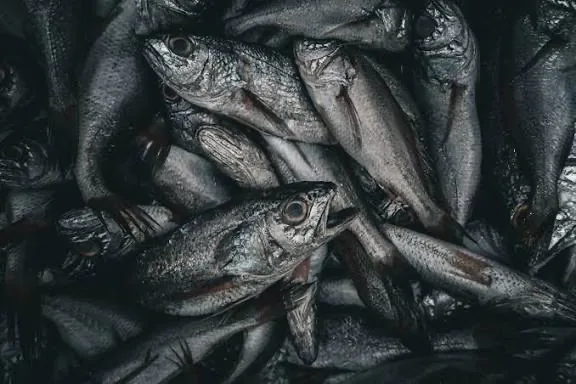
fish
They swim in rivers and oceans polluted by industrial wastewater. The PFAS accumulate in their tissue over time, traveling straight from factory, to water, to your dinner plate.
make-up
Waterproof. Smudge-proof. Long-lasting. The same chemicals that make your cosmetics stay on your face all day ensure they will stay in your bloodstream for a lifetime.
frying pan
The ultimate convenience. Until a single scratch in the non-stick coating releases forever chemicals directly into your food.
sunscreen
You apply it to protect your skin from cancer. But to make it waterproof, it is laced with chemicals linked to that exact same disease.
toilet paper
Flushed away in seconds, even though the chemicals used to soften the paper will contaminate our wastewater forever.

If you are feeling overwhelmed, you are not alone

You might think you can just throw away the pan, or change your sunscreen

The contamination does not stop at your front door. It has bled into the soil we build on and the water systems we rely on.

To truly understand the crisis, we have to look at the full picture

THE GEOGRAPHY OF FOREVER

Decades of industrial discharge, wastewater, and unchecked manufacturing have left a permanent invisible scar on our landscape.

Across Europe, thousands of sites are permanently contaminated. This is not an isolated incident.

PFAS do not stay locked in the soil of industrial zones. They bleed into groundwater.

The most terrifying thing about this map is how contamination moves.

This is the geography of forever.

Loading 41,202 sites…
Known contamination Known PFAS User Presumptive contamination PFAS manufacturing facility

Every site in the dataset, coloured by what is known about it.

Source: The Forever Pollution Project · Basemap OpenFreeMap · © OpenStreetMap contributors

Line drawing of a human figure, with the organs affected by PFAS marked

They are accumulating in our organs,coursing through our veins

Explore the anatomy of contamination

  • Uterus Child development

    Chemicals can cross the placenta during pregnancy. Prenatal exposure to PFAS has been associated with reduced birth weight and disruptions to early growth and development.

  • Reproductive organs Decreased fertility

    PFAS may interfere with reproductive hormones and ovarian or testicular function. Studies have linked higher PFAS exposure to reduced fertility and longer time to conception.

  • Kidney & liver Cancer risks

    Long-term PFAS exposure has been associated with an increased risk of kidney cancer, with more limited evidence for liver cancer. PFAS can also damage liver cells and alter normal liver function.

  • Immune system Reduced functioning

    PFAS can weaken the body's immune response by reducing the effectiveness of antibody production. Exposure has also been linked to diminished vaccine responses and increased susceptibility to infections.

  • Thyroid Hormonal dysregulation

    PFAS can disrupt hormone signaling. This can dysregulate the metabolism, growth, and development. Even subtle changes in thyroid function can have widespread effects throughout the body.

  • Blood vessels Increased cholesterol

    Higher PFAS exposure has consistently been associated with elevated blood cholesterol levels. This may contribute to an increased risk of cardiovascular disease over time.

You might wonder…

How is a chemical this destructive still being used, and remains legal?

The answer…

An abundance of lobbying, not a lack of legal action

Whenever nations attempt to implement universal restrictions on these forever chemicals, the industry fights back

Banning the entire PFAS chemical universe threatens the bottom lines of over 15 different corporate sectors

Hundreds of corporate players – led by the plastics industry – lobby together to defend their profits.

They do not fight the science behind it.

Instead, they rely on massive, orchestrated disinformation campaigns to undermine and kill proposed bans.

These "Merchants of Doubt" use the exact same influence tactics once used to protect the tobacco and fossil fuel industries.

Merchants of Doubt

Tactic 1

Not all PFAS

Tactic 2

There is no alternative

Tactic 3

It is not economically viable

Tactic 4

It is just too convenient

For 80 years, their greatest weapon has been invisibility.

They operated in the dark, betting that the public would never understand the chemistry or see through the corruption.

The law is not yet on our side. It does not force companies to disclose their PFAS use.

So we must force them ourselves.

Make the invisible visible.

Every time a consumer demands a PFAS-free alternative, it becomes a logged data point. It forces brands to either publicly admit they use forever chemicals, or prove they do not.

It makes their silence impossible.

You are not just a casualty. You are the market.

The market can demand alternatives.

Ask about your raincoat.

Ask about your frying pan.

Ask your local coffee shop for PFAS-free disposable cups.

Ask your favorite cosmetics brand.

Ask about your waterproof mascara.

Ask for PFAS-free alternatives

Ask for transparency

Ask about your sunscreen.

Ask about your dental floss.

Ask the outdoor gear companies.

Ask about your ski-wear.

Ask the corporations hiding behind the chemical lobby

Ask your supermarket about their food packaging.

Give reviews of products

Ask your local shops

Write reviews

Ask about the fast-food wrappers.